Does Laser Lipo Damage Organs? Myths vs. Medical Facts
Can a lipo laser damage organs? Discover the medical truth, real risks, complications and how to choose a safe procedure with evidence-based information.

Feeling insecure before an aesthetic procedure is completely normal. When someone searches the internet Can lipo lasers damage organs?, what you're really asking is: “Am I putting my health at risk by improving my appearance?” That question deserves a clear, honest, and evidence-based answer.
At the office, many patients arrive afraid that the laser “burns inside” or that it could reach vital organs such as the liver or kidneys. Disinformation on social networks has amplified these fears, mixing isolated cases with alarming generalizations.
The reality is more nuanced. La lipo laser It is a medical technique that, when performed correctly and in expert hands such as those of Dr. Garcia Rodriguez, is designed to act on subcutaneous fat, not on deep organs. But like any medical procedure, it's not risk-free.
In this article, we'll take a detailed look at the myths and realities about lipolaser safety, how it actually works, what its real risks are, and what you should know before making an informed decision.
What is a lipo laser and how does it actually work?
Laser lipo, also known as laser lipolysis or laser-assisted liposuction, is a procedure that uses light energy to weaken and liquefy fat cells before their progressive extraction or elimination by the body.
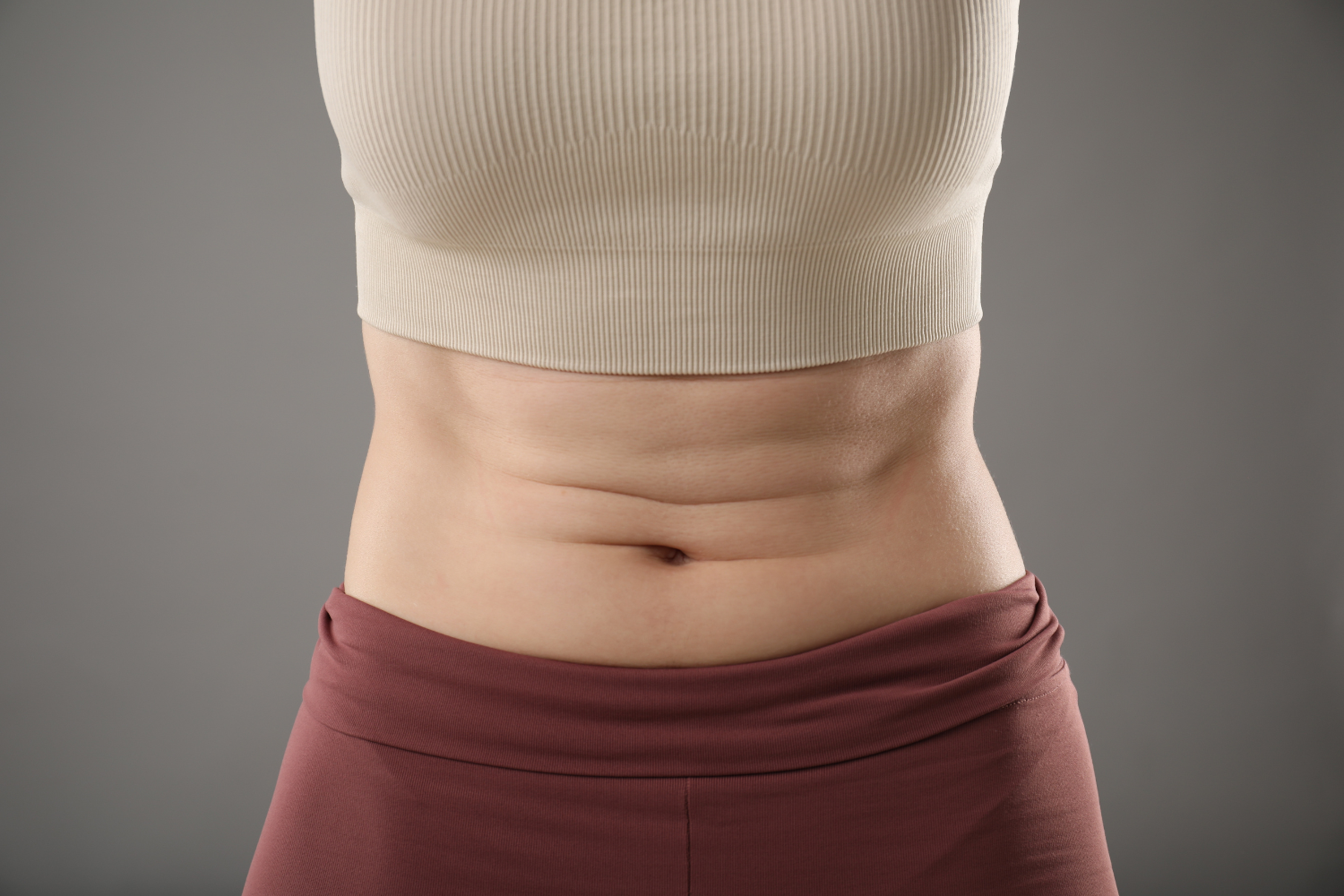
Unlike traditional liposuction, this technique seeks less trauma, less bleeding and faster recovery. However, its main indication is not to lose weight, but to improve body contour in specific areas.
Mechanism of action on subcutaneous fat
The laser emits a specific wavelength that generates controlled heat in fatty tissue. This heat breaks the adipocyte membrane, allowing the lipid content to become more fluid.
It is important to understand that the procedure is performed in the subcutaneous plane, that is, the layer of fat that is just under the skin. It does not cross the muscle fascia or penetrate internal cavities where the organs are located.
In experienced hands, energy is applied in a localized and controlled manner. Modern equipment allows you to regulate power and time to minimize thermal risks.
Difference between invasive and non-invasive lipo laser
There are two main modalities. The minimally invasive version involves inserting a laser fiber through a small incision to liquefy the fat before vacuuming. The non-invasive version uses external devices that apply energy through the skin without incisions.
In both cases, the objective is to act on localized fat. The difference lies in the level of intervention and the amount of treatable fat. The invasive modality allows for greater precision and more visible results in a single session.
Can a lipo laser damage organs? Evidence-based analysis
The direct answer is: should not harm internal organs when done properly. The laser is not designed to penetrate deeply or reach viscera.
The theoretical risk of organ damage does not come from the laser itself, but from the surgical technique. If a cannula is inserted too deep by human error, it could cause a mechanical injury. This risk also exists in traditional liposuction.
Laser penetration depth
The wavelengths used in lipo lasers have limited penetration and are designed to act on superficial fatty tissue. The optical fiber works in the subcutaneous plane.
The muscle fascia acts as a natural barrier. For the laser to reach an organ, it would have to cross multiple anatomical layers, which is not the case in a properly executed technique.
Real risk versus patient perception
The fear of “internal burns” is often based on ignorance of the physical mechanism of the laser. Heat is dissipated in the treated fabric and is controlled by specific parameters.
Serious events related to internal organs are extremely rare and are usually associated with severe technical errors, not the normal operation of the device.
Comparison with traditional liposuction
Liposuction Conventionally, thicker cannulas and direct mechanical aspiration are used. Historically, serious complications such as perforations or fat embolisms have been reported in high-volume procedures.
The lipo laser, by first liquefying the fat, allows for smoother movements and finer cannulas. This can reduce deep trauma and bleeding.
However, no surgical procedure is risk-free. The aspirated volume, the surgeon's experience and patient selection are determining factors.
Real complications of laser lipo
More than organ damage, the most common complications are related to skin and subcutaneous tissue.
Thermal injury and burns
Excessive heat can cause redness, blisters, or surface necrosis if not properly controlled. This is why it is essential to use certified and professional equipment with specific training.
Most of these complications are preventable with appropriate technique and postoperative follow-up.
Changes in sensitivity
Temporary numbness is relatively common. It occurs due to inflammation or transient involvement of small skin nerves. In most cases, the sensitivity returns within weeks or months.
Permanent nerve injury is rare when anatomical planes are respected.
Seroma and fluid accumulation
Seroma is a build-up of fluid under the skin. It may require drainage if it is significant. The use of a compression girdle reduces its incidence.
Fat embolism
Fat embolism is a rare but serious complication. It occurs when small particles of fat enter the bloodstream. It is not exclusive to laser lipo and can be used in traditional liposuction.
Symptoms include respiratory distress and neurological disorders, and require immediate attention.
Factors that increase risk
Safety doesn't just depend on the laser, but on multiple variables.
The surgeon's experience is crucial. A professional with specific training in body contouring understands the anatomical planes and controls the energy applied.
The aspirated volume directly influences the risk. High-volume procedures increase systemic complications.
The patient's condition also matters. Severe obesity, bleeding disorders, previous surgeries, or poorly controlled chronic diseases can increase the risk.
Realistic recovery and expectations
Recovery is usually quick. Many people resume light activities within 24 to 48 hours.
Swelling and bruising are common for one to two weeks. The use of a compression girdle helps to shape the contour and reduce edema.
The final results are seen between three and six months, when the inflammation disappears and the skin completely retracts.
It's important to understand that laser lipo isn't a substitute for healthy habits. If the patient subsequently gains weight, the remaining fat cells may increase in size.
Who is the ideal candidate for laser lipo?
The best candidate is someone close to their ideal weight, with localized fat deposits and good skin elasticity.
It is not a solution for obesity or for severe excess skin. In such cases, procedures such as Abdominoplasty may be more appropriate.
A personalized medical evaluation can determine if the procedure is safe and appropriate.
How to reduce risks and increase security
Choosing a certified surgeon with verifiable experience is the most important step.
Verifying that the equipment is approved by health authorities and that the center complies with safety regulations is also essential.
Following pre- and post-operative instructions reduces complications. Avoiding smoking, managing chronic diseases and attending medical check-ups improves outcomes.
Frequently asked questions about Can lipo lasers damage organs?
Can the laser burn internal organs?
No. The laser acts on subcutaneous fat and does not penetrate to the organs when used properly.
Is it safer than traditional liposuction?
It may have less surface trauma, but safety depends primarily on the surgeon and the volume treated.
Are there documented cases of organ damage?
They are extremely rare and generally related to severe technical errors, not to the usual operation of the laser.
How do I know if I'm at risk of complications?
A complete medical evaluation will identify factors such as chronic diseases, severe obesity or coagulation problems that may increase risks.
Conclusion: Security based on information and experience
When you ask yourself Can lipo lasers damage organs?, you're actually looking for peace of mind. And that peace of mind should not be based on empty promises, but on clear medical information and personalized evaluation.
Evidence indicates that the risk of damage to internal organs is very low when the procedure is performed correctly. Real risks exist, but they are usually related to technique, patient selection and volume treated.
In the office of Dr. García Rodríguez, each patient receives an individual assessment, detailed explanation of risks and realistic expectations. Safety isn't a slogan: it's a protocol.
If you are considering this procedure and want an honest professional opinion, schedule a consultation and clarify all your doubts. Making an informed decision is the first step toward a safe and satisfactory outcome.