U-Graft Technique in Fat Transfer Surgery Explained
Learn how the U-Graft technique improves fat transfer, preserving cell viability and offering natural and long-lasting results. Discover its benefits with Dr. Antonio García Rodríguez.
Fat Transfer: A Natural Body Shaping Method
La autologous fat transfer or lipotransference is a procedure that uses the patient's own fat to improve the volume, shape, or symmetry of certain areas of the body. This approach has the advantage of being biocompatible and offering natural results, since it uses its own tissue without the need for implants or synthetic materials.
In recent years, technological innovation has perfected this technique. One of the most outstanding is the U-Graft, which optimizes the process of collecting and reinjecting adipose tissue, increasing its survival and reducing the risks of resorption or irregularities.
What is the U-Graft technique?
La U-Graft technique is an advanced fat transfer system that combines precision in extraction, sterile processing, and controlled reinjection of adipose tissue. Its objective is to preserve as many viable fat cells as possible and to improve their integration into the recipient area.
Unlike traditional methods, the U-Graft technique minimizes cell damage during liposuction and grafting, which results in greater retention of the transferred volume and a more uniform result.
You may also be interested in: Learn about the benefits of high-definition liposuction: Lipo HD.
Clinical advantages of the U-Graft technique
1. Increased fat cell viability
The success of a fat transfer depends on the survival of the transplanted cells. The U-Graft technique employs a closed and controlled system that reduces adipose tissue exposure to air and pollutants, preserving their vitality and promoting a more stable integration.
2. Longer-lasting and natural results
Thanks to the purity of the graft and the controlled infiltration method, the grafted fat is better adapted to the recipient tissue, offering aesthetically more natural and long-lasting results. Patients notice a smoother texture and a harmonious body contour.
3. Reduction of surgical trauma
The U-Graft technique uses state-of-the-art extraction and reinjection cannulas, which allow delicate tissue manipulation. This translates into less swelling, bruising, and shorter recovery time.
4. Versatility in different body areas
It can be applied in a variety of areas: face, buttocks, breasts, hands, and post-liposuction depressions. Its precision makes it possible to shape small and sensitive areas, such as the cheekbones or the nasogenian grooves, with great volume control.
5. Safe and minimally invasive procedure
By using autologous tissue, the risks of rejection or allergic reactions are eliminated. In addition, the U-Graft system maintains a closed circuit that meets the biosafety standards required in advanced cosmetic surgery.
How the procedure is done step by step
The U-Graft technique follows a meticulous sequence that combines aspiration, filtration, and controlled reinjection technology.
Medical evaluation and personalized planning
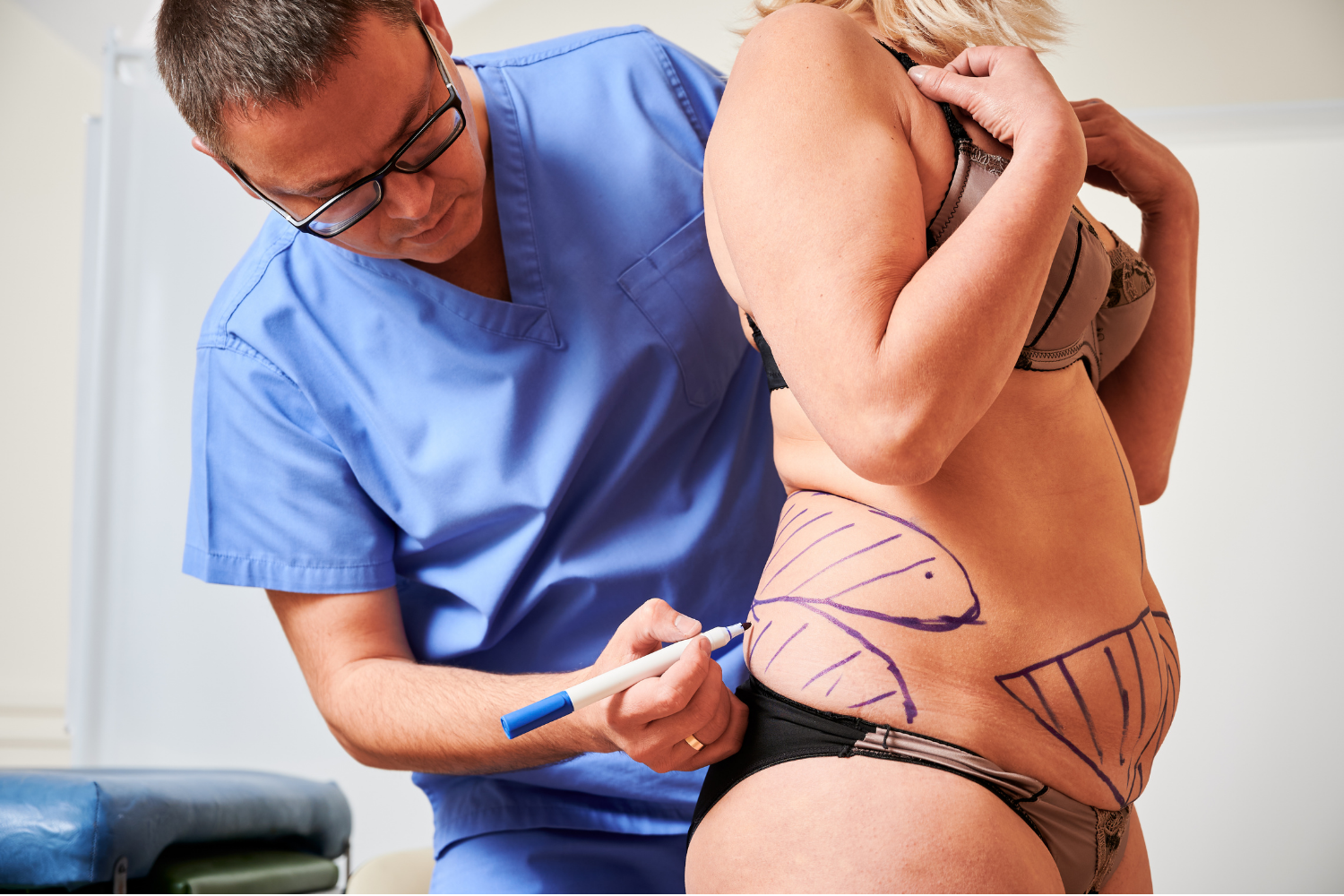
The surgeon analyzes the donor and recipient areas, determines the amount of fat to be transferred, and defines the target volume according to the anatomy and the expected results.
Extraction of adipose tissue
It performs a gentle liposuction using fine cannulas connected to the U-Graft system, which guarantees a homogeneous and atraumatic suction.
Fatty graft processing
The system automatically separates impurities, liquid, and blood debris, preserving only viable fat cells and regenerative factors.
Precise and gradual injection
The purified fat is reinserted in small quantities and at different depths, following the micrografting technique. This promotes tissue irrigation and improves cell survival.
Closure and recovery
It does not require visible stitches, and the patient can resume activities in a few days. The results begin to be seen after the reduction of the initial edema.
You may also be interested in” Lymphatic Drainage After Lipo: An Essential Guide to Recovery”.
Aesthetic and reconstructive applications
The U-Graft technique has proven its effectiveness both in cosmetic surgery and in reconstructive procedures. Its most common applications include:
- Buttock augmentation and shaping (Brazilian Butt Lift with U-Graft).
- Correction of breast asymmetries or moderate bust enlargement.
- Facial rejuvenation with autologous fat (facial lipofilling).
- Filling of post-liposuction depressions or atrophic scars.
- Restoration of volume in hands and aging areas.
The precision of the system allows smaller volumes to be used with more defined and natural results.
Recovery and aftercare
The process of retrieval it's generally fast. Most patients can return to their normal activities in 48 to 72 hours, with certain precautions to protect the treated area.
During the first few days, there may be mild swelling or tenderness, which gradually subsides. The use of compression garments in the donor area and regular medical monitoring are essential to ensure proper graft integration.
The final results can be seen between 6 and 12 weeks thereafter, when the transferred fat has stabilized in its new location.
Long-term results
The results obtained with the U-Graft technique are usually longer lasting than conventional lipotransference, thanks to the high survival rate of the grafted cells.
In many cases, more than 80% of the transferred volume is kept for the long term, avoiding the need for retouching or new interventions. In addition, the natural texture and biological behavior of adipose tissue make the result practically indistinguishable from the original tissue.
The value of an advanced technique in personalized cosmetic surgery
La U-Graft technique represents one of the most important innovations in fat transfer surgery. Its precision, safety, and ability to provide natural results make it an ideal option for patients looking to restore volume, improve contour, or rejuvenate their appearance without resorting to implants.
Dr. Antonio Garcia Rodriguez, a specialist in plastic, aesthetic, and reconstructive surgery, uses this advanced technique to design personalized treatments that harmonize the body with natural and lasting results.
If you want to know if the U-Graft technique is right for you, complete the contact form and schedule a personalized consultation to assess your case.
FAQs
What is the difference between the U-Graft technique and traditional lipotransfer?
Unlike conventional methods, the U-Graft technique maintains a closed and automated system that better preserves fat cells and prevents contamination. This improves the quality of the graft and the durability of the result.
How long does the result of a fat transfer with U-Graft last?
In most cases, the result is permanent. Fat that integrates properly behaves like other body tissue, increasing or decreasing slightly with weight changes
Can it be combined with other surgeries?
Yes. It is common to combine the U-Graft technique with procedures such as tummy tuck, facelift, or liposuction to optimize body contour and balance proportions.